Hambela Dabaye

Regular price
$22.00
Sale price
$22.00
Regular price
This amazingly clean lot from the Guji region is a great example of why we love to roast light. Featuring a tea-like presentation, we find subtle notes of nectarine and luscious blackberry, underpinned with a refreshing minerality that reminds us of a Wuyi oolong tea.
Region: Guji, Ethiopia
Producer: Kedir Hassan
Process: Washed
Varietal: Heirloom
Elevation: 1816 - 2100 masl
Tasting Notes: Nectarine, Oolong Tea, Blackberry

Hambela Dabaye

Description

This amazingly clean lot from the Guji region is a great example of why we love to roast light. A tea-like presentation is noticeable as we sip from hot to cool. In the cup we find delicate notes of nectarine and luscious blackberry, underpinned with a refreshing minerality that reminds us of a Wuyi oolong tea. 

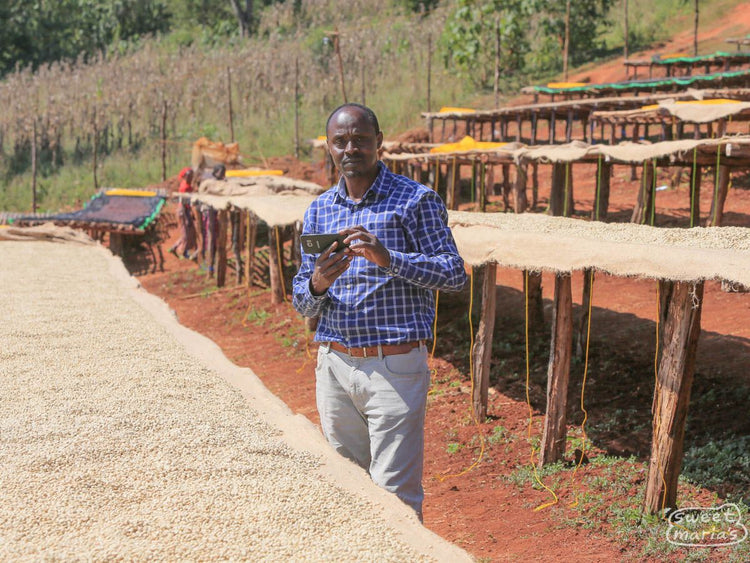
Hambela Dabaye is run by Kedir Hassan, and name signifies that the Hambela station is based in the kebele (ward) of Dabaye. Kedir is both a coffee farmer and mill manager, and works with coffees sourced from Dabaye as well as neighboring regions such as Buliye, Wamina, Boricha, and Dari Rogicha. 

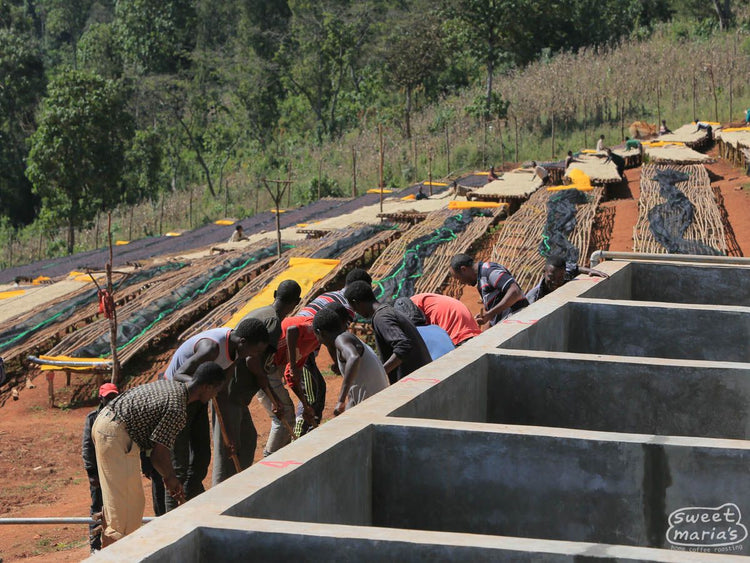
The coffees are washed process and sun-dried on raised beds.


Varietal

An "heirloom" cultivar is a catch-all term generally applied to Ethiopian coffees that are usually a highly diversified mix of mutliple varietals. Since Ethiopia is the birthplace of coffee, there are an estimated six to ten thousand varietals being grown there. With difficulties tracing each specific variation and mix as cultivation has occured for so long, "heirloom" is used to denote these regional varietals.

Over time, the efforts to increase tracebility and narrow these definitions can be seen through the work of local agricultural institutions like the Jimma Agricultural Research Center (JARC).

Processing

The coffees are washed process and sun-dried on raised beds.

Washed Process: Coffee processing has become so varied and innovative that it's hard to give a general overview of a certain "process", since producers can have small variations within their methods.
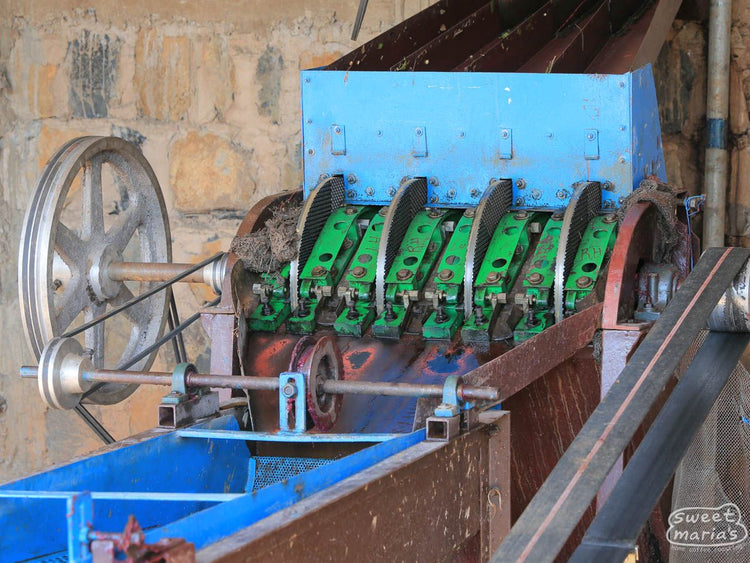
A typical "washed" process usually means that the coffee beans are depulped (removing all fruit flesh) before fermentation/drying.

Sourcing & Pricing Transparency

Green Cost: $7.67/lb
Importer: Coffee Shrub

Our "Green Cost" represents the cost of the raw coffee as well as associated transportation costs of shipping from warehouse to our roastery. As a small roaster, this allows us to provide a consistent calculation of our most important expense, given that other costs (e.g. packaging, labor, roast profiling R&D, quality control etc.) can vary significantly. We hope to be able to provide even more detailed cost breakdowns soon.

Description

This amazingly clean lot from the Guji region is a great example of why we love to roast light. A tea-like presentation is noticeable as we sip from hot to cool. In the cup we find delicate notes of nectarine and luscious blackberry, underpinned with a refreshing minerality that reminds us of a Wuyi oolong tea. 

Hambela Dabaye is run by Kedir Hassan, and name signifies that the Hambela station is based in the kebele (ward) of Dabaye. Kedir is both a coffee farmer and mill manager, and works with coffees sourced from Dabaye as well as neighboring regions such as Buliye, Wamina, Boricha, and Dari Rogicha. 

The coffees are washed process and sun-dried on raised beds.


Varietal

An "heirloom" cultivar is a catch-all term generally applied to Ethiopian coffees that are usually a highly diversified mix of mutliple varietals. Since Ethiopia is the birthplace of coffee, there are an estimated six to ten thousand varietals being grown there. With difficulties tracing each specific variation and mix as cultivation has occured for so long, "heirloom" is used to denote these regional varietals.

Over time, the efforts to increase tracebility and narrow these definitions can be seen through the work of local agricultural institutions like the Jimma Agricultural Research Center (JARC).

Processing

The coffees are washed process and sun-dried on raised beds.

Washed Process: Coffee processing has become so varied and innovative that it's hard to give a general overview of a certain "process", since producers can have small variations within their methods.
A typical "washed" process usually means that the coffee beans are depulped (removing all fruit flesh) before fermentation/drying.

Sourcing & Pricing Transparency

Green Cost: $7.67/lb
Importer: Coffee Shrub

Our "Green Cost" represents the cost of the raw coffee as well as associated transportation costs of shipping from warehouse to our roastery. As a small roaster, this allows us to provide a consistent calculation of our most important expense, given that other costs (e.g. packaging, labor, roast profiling R&D, quality control etc.) can vary significantly. We hope to be able to provide even more detailed cost breakdowns soon.

you may also like

stay connected

follow us for updates on new product releases, events, and a behind-the-scenes look at our roasting journey!